
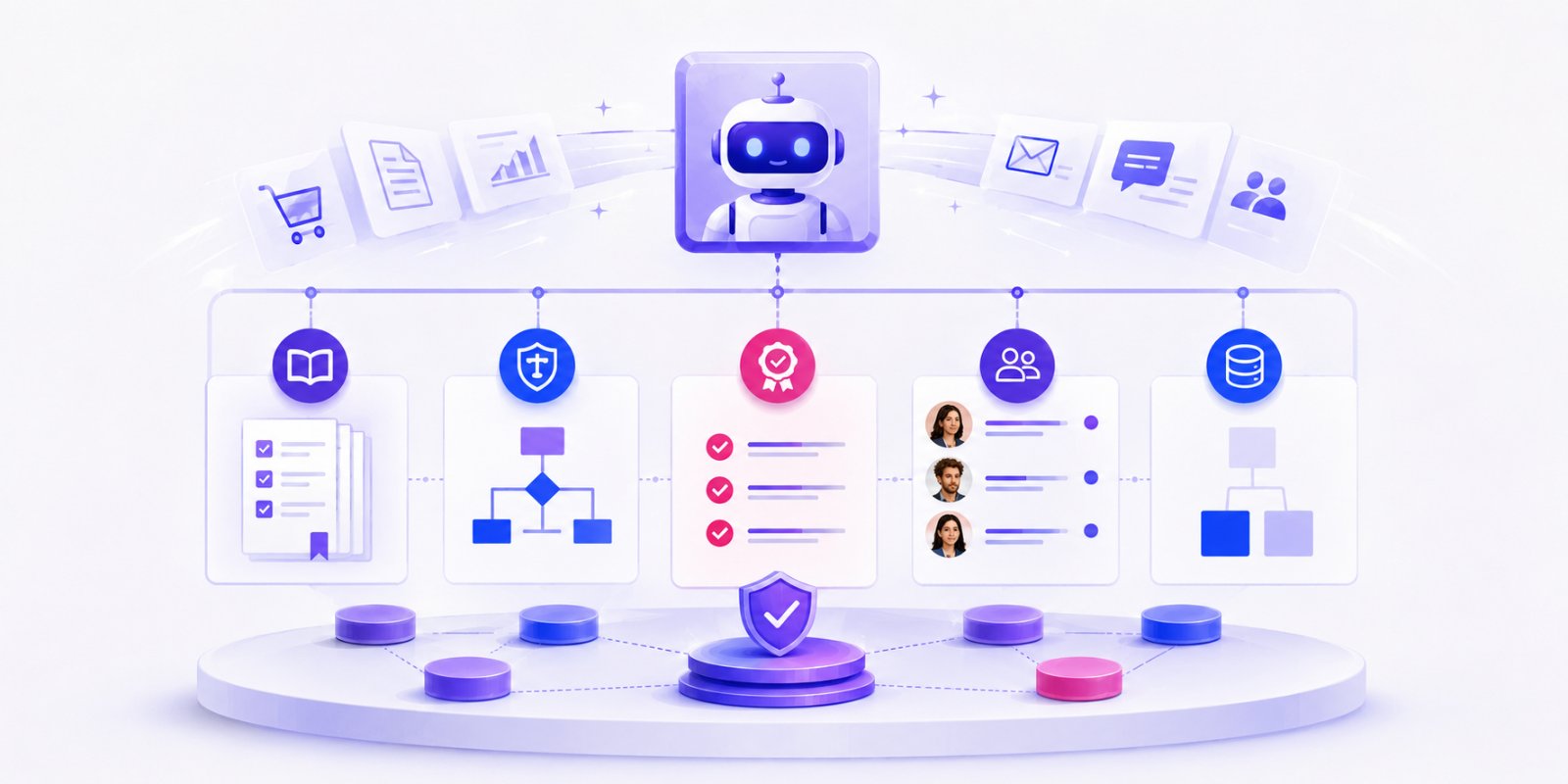
Let's put it plainly: an AI agentAI agentAn autonomous AI program that executes tasks grounded in the governed practices of your Practice Graph. is only worth what it executes.
We spend a lot of time right now asking what an agent is capable of doing. Booking, drafting, following up, analyzing, chaining stepsValidation stepA stage in a publication's path (draft → review → approved), with rules that gate each transition. without being held by the hand. The capability impresses, and it's advancing fast. But it asks the wrong question. An agent capable of anything, that knows nothing about how you work, will produce a plausible, generic result, off-target for your house. It will be competent. It won't be you.
Worse: autonomy makes the problem worse. An assistant waits to be reviewed, to be cleared before sending. An agent acts. If it doesn't have the right practicePracticeA unit of know-how captured in Marylink: not a document but an executable structure (content, prompt, rules, style). at hand, it doesn't stop to ask: it improvises. And improvising, for an agent, means reinventing each time a method your experts had already settled, without knowing it, without the memory of what worked last time. The more autonomy you give it, the faster it produces average quality, at scale.
Take André Vidal's firm again. A junior hands an agent the drafting of a proposal for a client. The agent executes, fast, cleanly, without a single mistake. The deliverable is correct. It is also indistinguishable from what any firm would produce with the same tool. All the firm's value, its proven frameworks, its angles, its reflexes, its tone, the way the partners turn a recommendation, all of it stayed outside the loop. The agent executed, yes. But it executed the average of the web, not the practice of the house. And no one notices, because the result looks professional.
The question isn't: can my agent do the task. It's: by which practice, and validated by whom.
For an agent to execute your know-how rather than a generic one, that know-how has to exist in a form it can reach and execute. Not a wiki no one reads, not a PDF lost in a folder. Typed, governed, versioned practices: a framework, a prompt, a style, a rule, endorsed by a referent and kept up to date. Plugged into the agent via MCPMCPModel Context Protocol: the open standard that connects an AI assistant (Claude, etc.) directly to your Marylink space., the open standard spreading right now that connects an assistant to your real content.
The agent then reaches into that capital for the validated practice, combines it with the right style and the right model, executes it, and, if it's good, publishes it for the rest of the team. The next time, the colleague doesn't improvise either: they start from what already worked, improved by whoever came before. The same agent that, without a framework, diluted the house's know-how now makes it circulate and grow.
It's a complete reversal. Without governed practices, the more autonomy you give your agents, the faster you manufacture memoryless output, smooth and interchangeable. With them, every execution deposits something, and the capital builds instead of leaking. The same autonomy, two opposite outcomes, depending on whether or not there's a practice behind it.
That your agents will execute, in 2026, is settled. You hardly have a choice there.
The only question left to you: execute what, and validated by whom?