
Marylink's research formalizes how AI usage becomes collective, measurable and reusableReuseThe same practice serving many times, across many spaces, the key measure of the Practice Graph's value. practicesPracticeA unit of know-how captured in Marylink: not a document but an executable structure (content, prompt, rules, style)..
This risk of lost know-how is formalized by Acemoglu, Kong & Ozdaglar (NBER 34910, February 2026 · MIT). Their conclusion is clear: aggregating collective knowledge raises performance and resilience.
What your teams learn with AI has to be pooled. Otherwise it walks out the door with every departure or tool change.
A good way of working breaks down into four elements, mapped 1:1 to the platform.
Intent, content, rules, style.
Authors, experts, reviewers.
SpacesSpaceA workspace by domain or topic where a team publishes, shares and governs its practices. where you publish, validate.
CREWCREWMarylink's governance framework (Concepts, Roles, Environments, Workflows) grounded in research. answers a simple question: who does what, where, along which steps. That's what makes a practice shareable, instead of stuck in one person's head.
A search engine links facts in a knowledge graph. Marylink links ways of working. Every use enriches the graph instead of forgetting it.
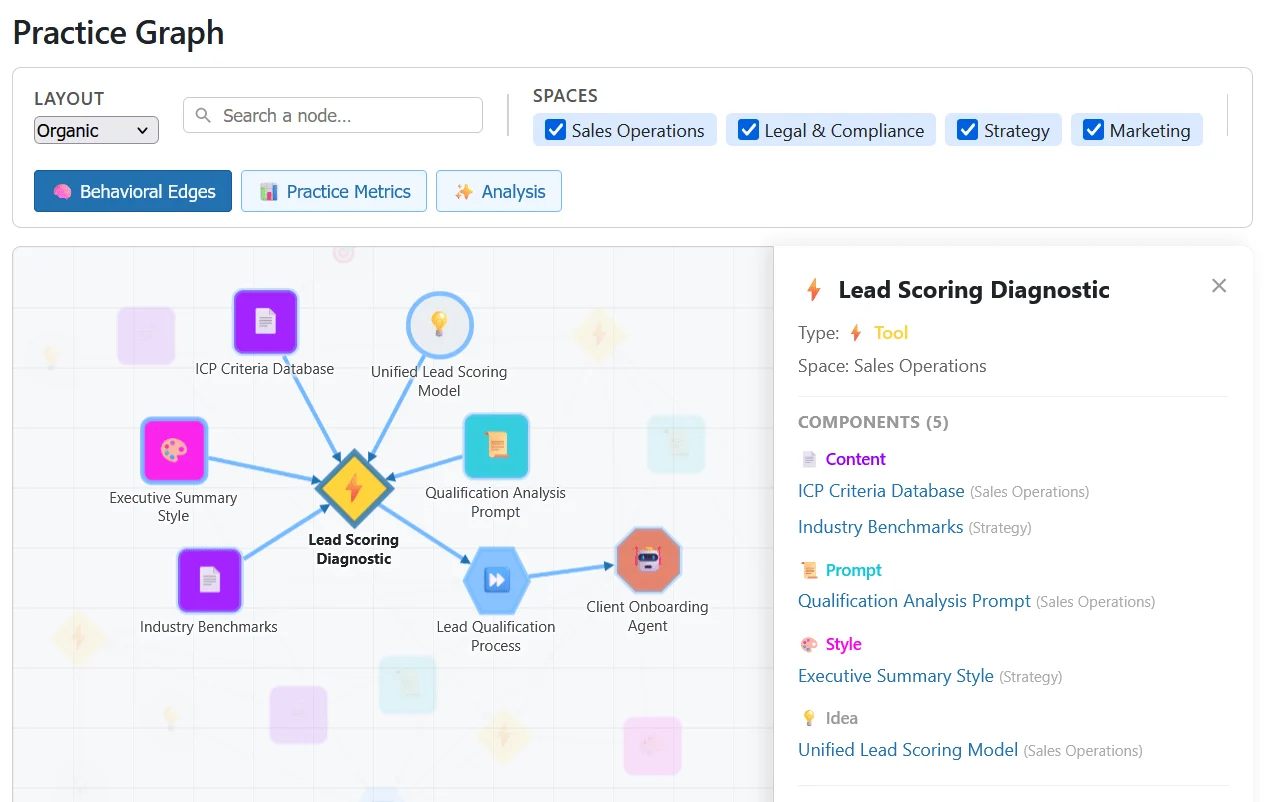
Just as a knowledge graph links facts, the Practice Graph links your methods. Humans and AI agentsAI agentAn autonomous AI program that executes tasks grounded in the governed practices of your Practice Graph. draw on it, and every reuse makes it more reliable.
Every mechanism of the framework is instrumented in the platform: multi-criteria reviewReviewAn expert's assessment of a practice: score, comments and recommendations against criteria., practice maturity, usage signal, contributor expertise.
M. Elmoukhliss, H. Mary.
Read → PreprintStructuring know-how for agentic AI.
On ResearchGate →Validated, measured and reusable practices — inside Marylink.