
Short analyses on AI capitalizationCapitalizationTurning know-how produced along the way into a reusable asset, instead of losing it after each use., agents, governanceGovernanceThe roles, validation steps and reviews that ensure the quality of shared practices. and the risk of lost know-how.
Five takes, one conviction: AI is only worth what it leaves behind.

Thirty years of telecoms in one lesson: the value is never in the handset, always in the network.

It's not that your teams use AI on the quiet. It's that their best discoveries stay there, instead of becoming yours.
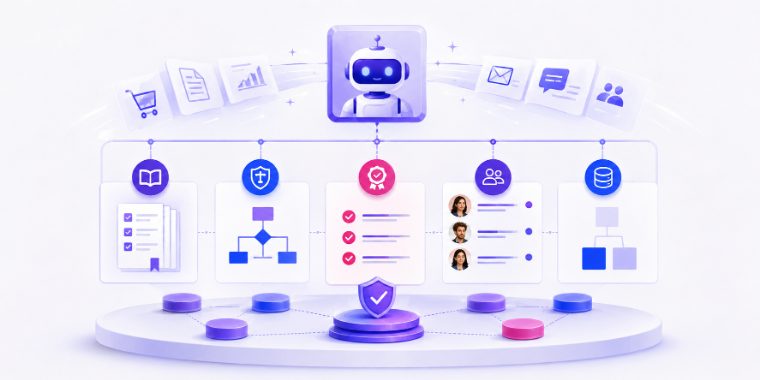
We talk about what agents can do; never about what they execute. Yet that's where everything is decided.

Your teams are more efficient than ever, but what they learn no longer accumulates: the collective know-how that capitalizes nowhere. An NBER working paper names the paradox.

Banning creates shadow AI; allowing everything creates risk. A third way: govern the practice, not the tool.
Three honest comparisons, against an approach, never a brand — for CIOs, CTOs and architects.

“Isn't this just RAG?” No. The three things RAG doesn't see: structure, governance, executability.
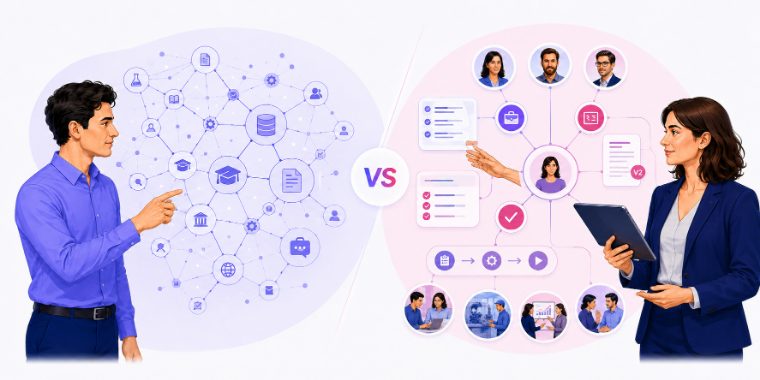
A knowledge graph maps what you know. A Practice Graph keeps what you know how to do. “Why” versus “how.”

A skill makes an agent capable. But with no referent, no version, no context, a capability isn't a practice. It's a building block.
Three first-person essays, no jargon. What AI does to the way we learn, grow, and stay ourselves.

Is starting from zero really how you earn it? The Dreyfus model of expertise dismantles the self-made myth: a case can be borrowed.

When AI gives everyone the same capability, what makes you irreplaceable? Your moat is your own capital, the part that compounds.

You're faster than ever, and one day you can't do it without the tool. Knowledge collapse, at the scale of a single person.
Six illustrated stories, each on its own page: the force of the boards, plus the depth of the text. See all the carousels →
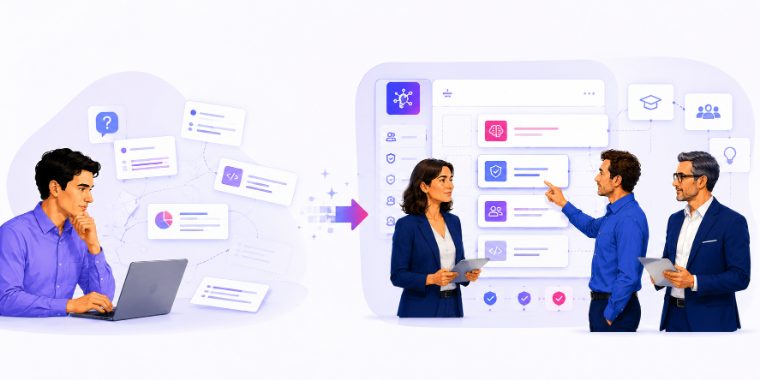
From the throwaway prompt to the living brick: AI moves from an isolated answer to a governed, collective asset.

Your Shadow AI isn't a risk to shut down, it's a raw material to convert into a governed asset.

The agent knows nothing on its own: it walks a graph of governed practices and composes the answer.

Neither the prompt nor the document: the atomic unit of know-how is the governed practice.
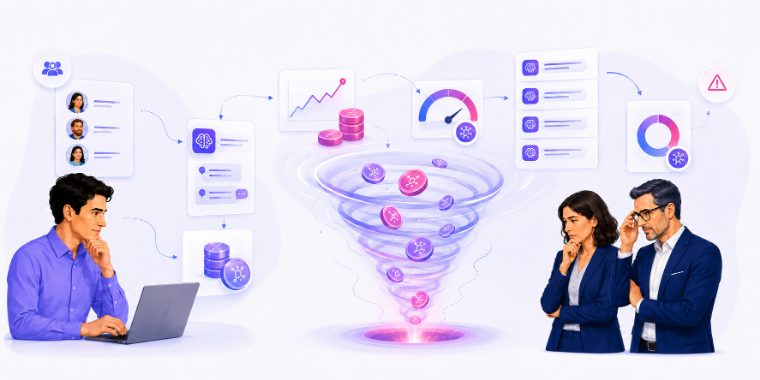
The step-by-step mechanics of the dependence that strips your bargaining power.
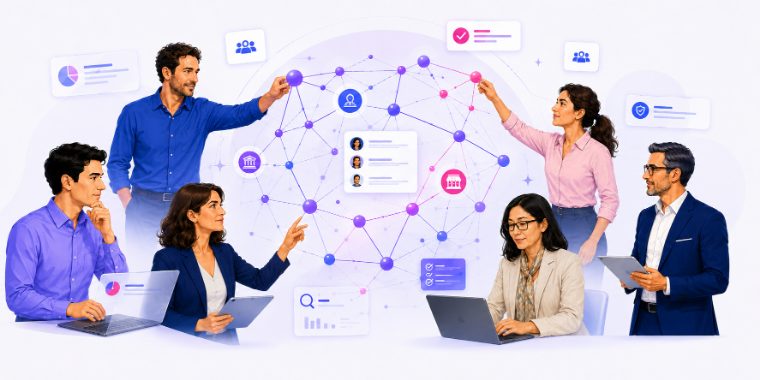
A graph stores knowledge; only a community of roles weaves it and keeps it alive.
Our research and the in-depth pages, freely available.
The operational governance framework for generative AI. ResearchGate.
Structuring know-how for agentic AI. Preprint.
Practice Engineering, CREW, and the move from knowledge graph to practice graph.
Every Practice Graph term, defined simply. From A to Z.
In 30 minutes, we connect Marylink to your usual AI and show you what it capitalizes from the very first pass.