
The token trap
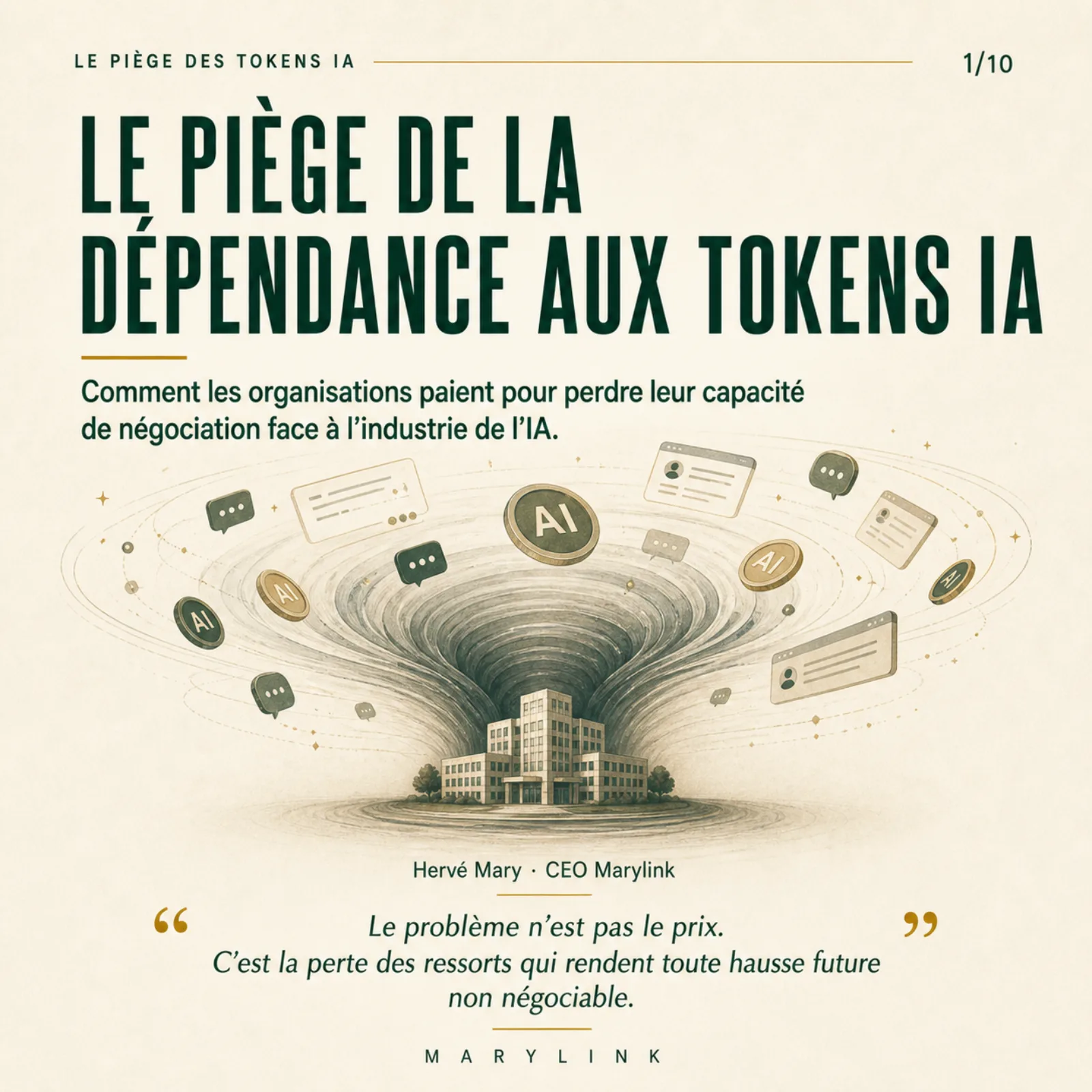
Nobody signs up to become captive. Captivity to AI isn't decided in a day, it's built, move after move, while everything is going well. Today's prices are attractive because they set up tomorrow's. Here is the mechanics of the trap, step by step: how an organization pays, without seeing it, to lose its ability to say no.
Today's prices are a setup
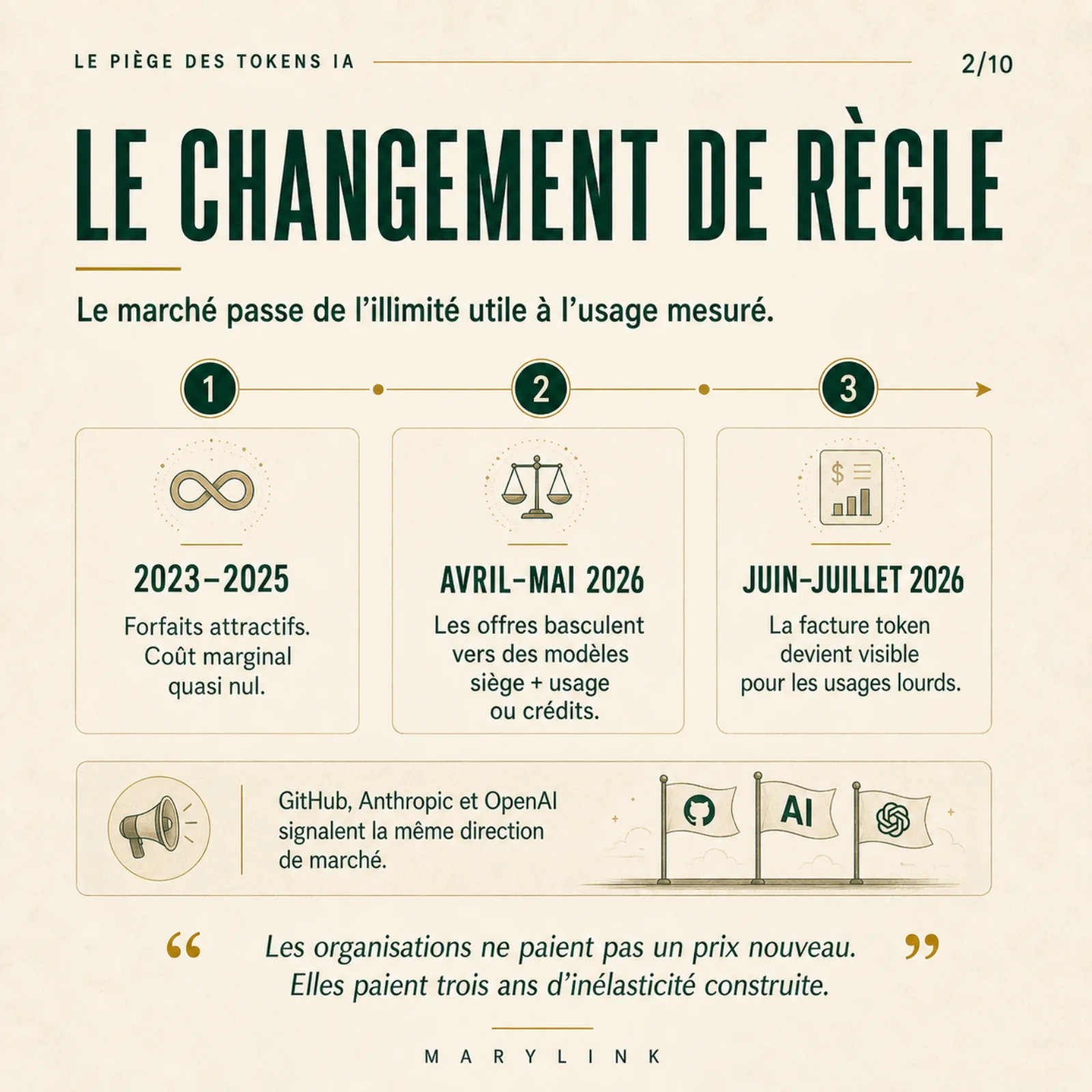
The starting point isn't a conspiracy, it's a sequence. Between 2023 and 2025, the marginal cost of a model call stayed near zero on the customer side: generous plans, de facto unlimited, deliberately low entry prices. This phase isn't a gift, it's a market investment, adoption is subsidized to install usage before installing the price.
The switch comes next. Offers slide toward seatSeatA named user license. Marylink bills per seat, adjustable at any time.-plus-usage, or toward credits, and the bill for heavy usage suddenly becomes visible. When several providers signal the same direction at the same moment, it isn't a pricing coincidence: it's the end of a phase.
The trap isn't a bill, it's a trajectory
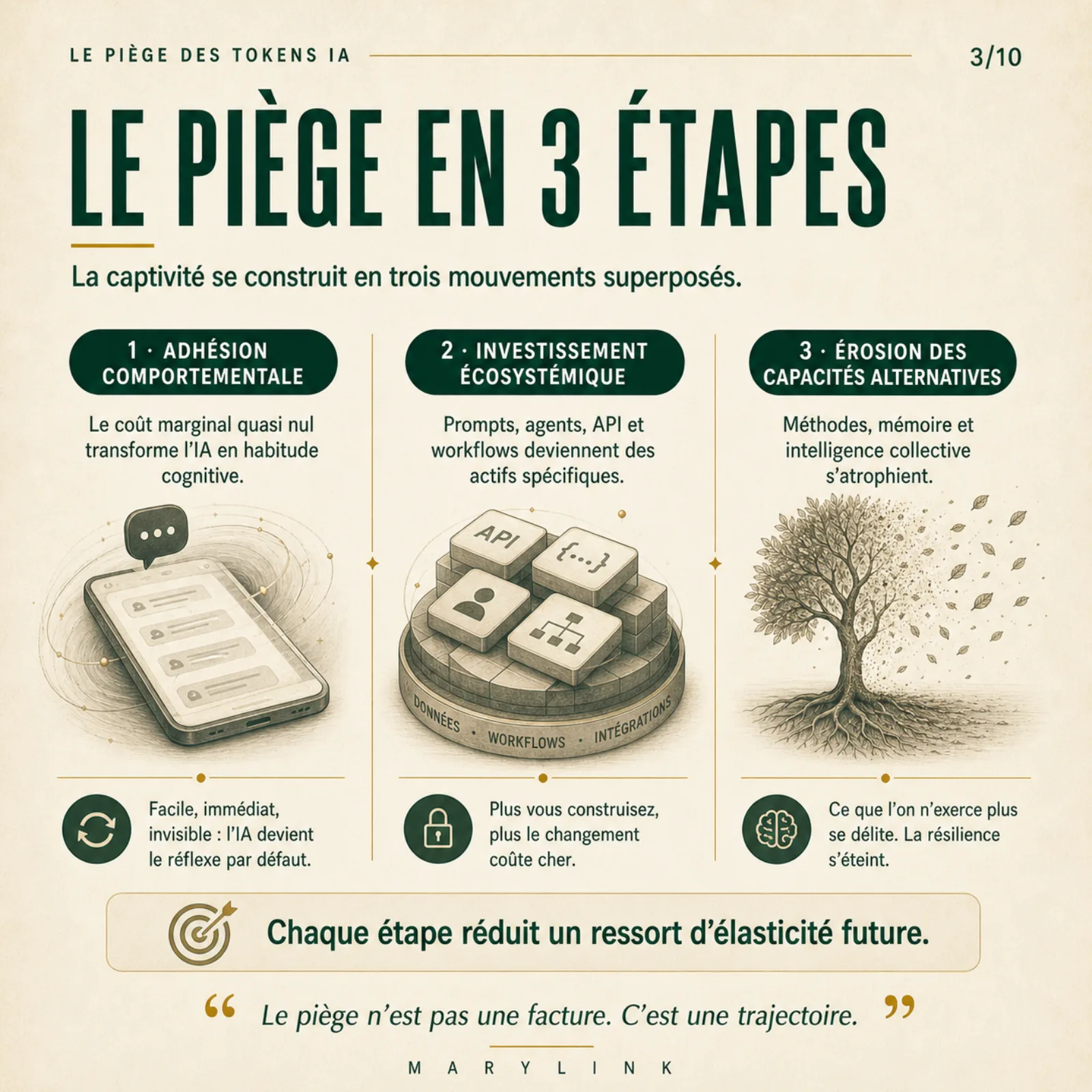
Dependence doesn't drop all at once the day the price rises. It settles in three layered movements, each setting up the next. First: behavioral adoption, near-zero cost turns AI into the default reflex. Second: ecosystem investment, prompts, agents, APIs and workflows become assets glued to one vendor. Third: erosion of alternative capabilities, method, memory and collective intelligence atrophy from disuse.
Each movement is rational on its own. It's their stacking that closes the trap: at every step, a spring of future elasticity quietly disappears.

First movement: usage becomes a reflex
A price that fades doesn't disappear, it shifts behavior. When perceived marginal cost is near zero, nothing pushes toward thrift: you re-prompt to check, you re-run an agent that got it wrong, you chain reasoning stepsValidation stepA stage in a publication's path (draft → review → approved), with rules that gate each transition. where one would do. Efficiency stops being a reflex because it can no longer be seen.
What starts as a simple convenience becomes a mental habit, then a corporate culture norm. And an installed norm isn't renegotiated by a memo: it's already in everyone's gestures.
Second movement: the asset becomes a chain
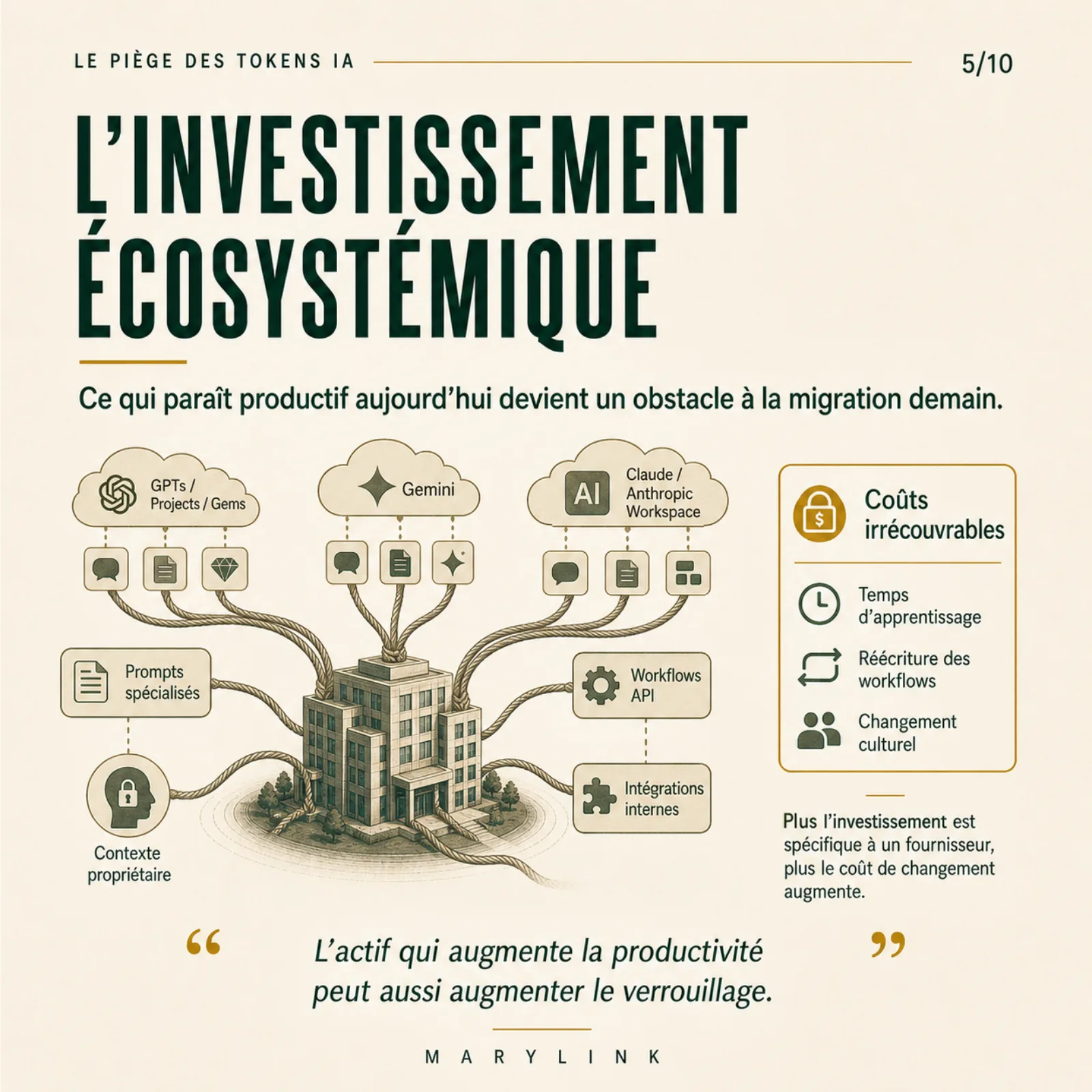
This is the most insidious movement, because it looks like progress. As you build, specialized prompts, GPTs, projects, gems, API workflows, proprietary context, you gain productivity. But these assets are calibrated to one vendor's specifics. This is what economist Oliver Williamson called asset specificity: the more an investment is tailored to a precise partner, the more it costs to leave.
The switching cost is no longer just a license to cancel. It's learning time, workflows to rewrite, a cultural change, all sunk costs that turn the productive asset into a reason to stay.
Third movement: the ability to do without fades
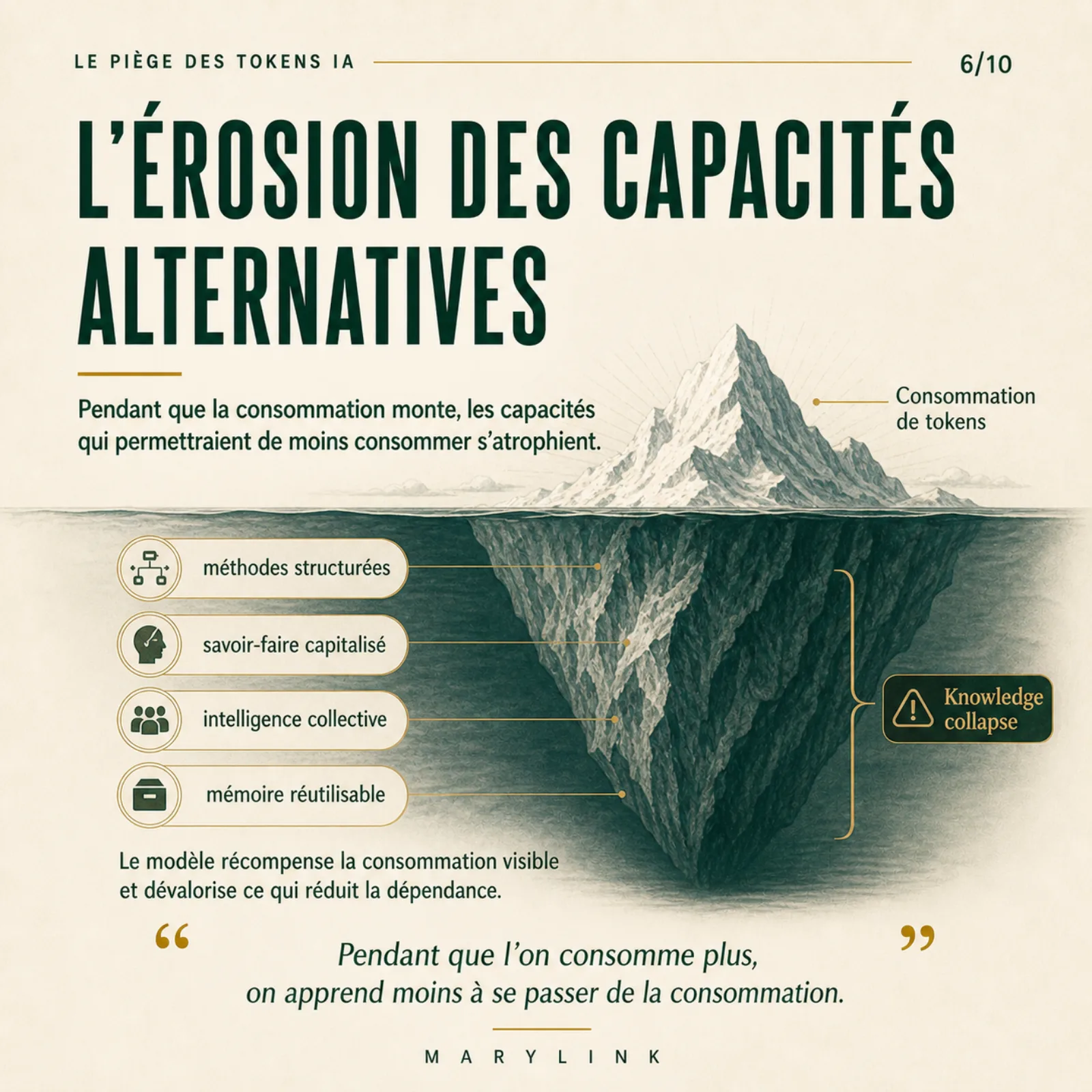
The most discreet movement is also the deepest. The business model rewards visible consumption and mechanically devalues what would reduce dependence: structured methods, capitalized know-how, collective intelligence, reusableReuseThe same practice serving many times, across many spaces, the key measure of the Practice Graph's value. memory. What you stop exercising atrophies. Resilience fades with no alarm sounding.
This is the risk economist Daron Acemoglu describes as knowledge collapseKnowledge collapseThe erosion of institutional memory when AI accelerates execution but nothing gets capitalized. (NBER, working paper 34910): through constant delegation, the organization loses the very capacity that would let it delegate less. As we consume more, we learn less about how to do without consumption.
What really disappears: the power to say no
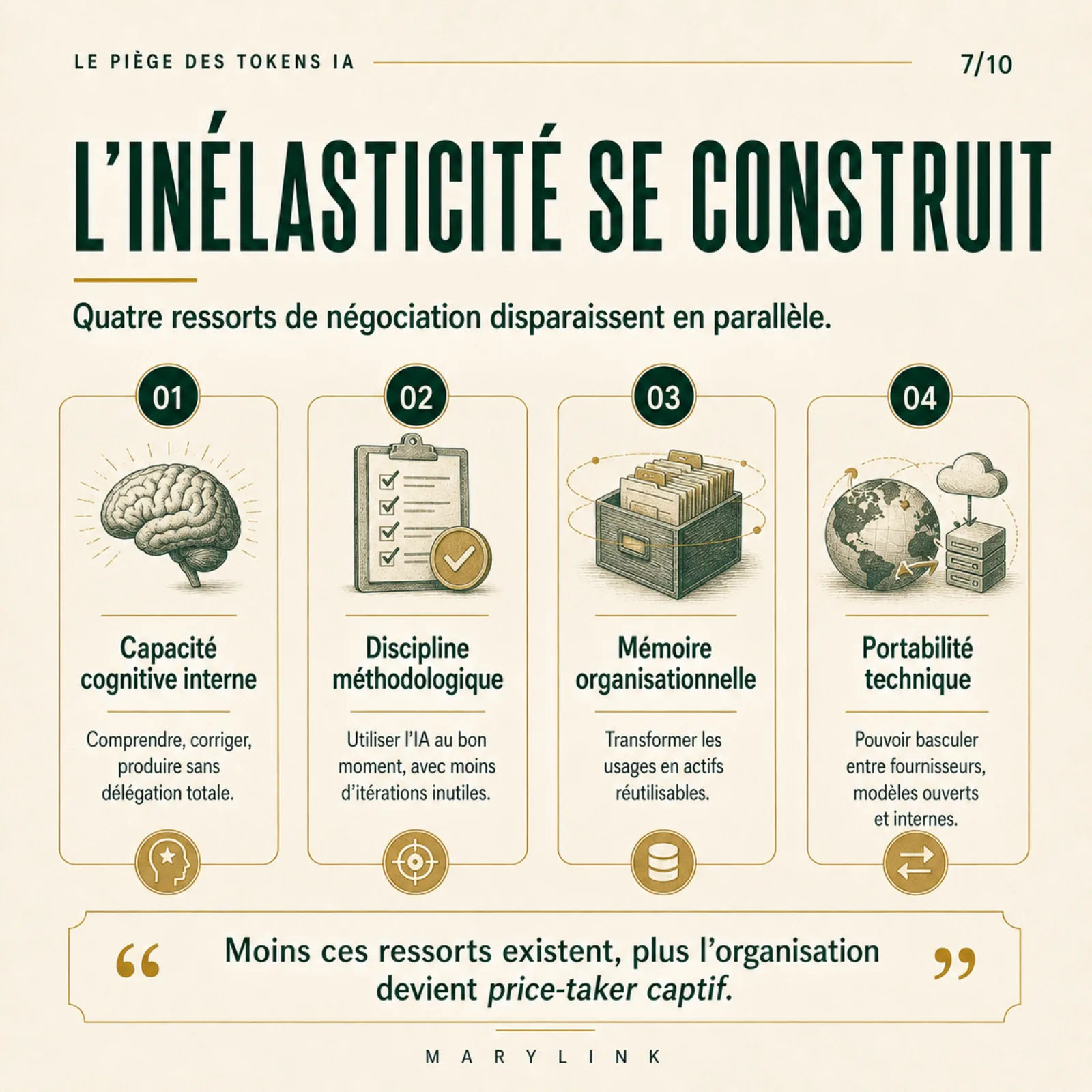
The three movements share one effect, and that's the real subject. Four bargaining levers fade in parallel. Internal cognitive capacity: to understand, correct, produce without delegating everything. Methodological discipline: to use AI at the right moment, without needless iterations. Organizational memory: to turn usage into reusable assets. Technical portability: to switch between vendors, open models and internal solutions.
The fewer of these levers exist, the more the organization becomes a captive price-taker: it absorbs the price instead of discussing it. The problem was never the price itself, it's the disappearance of everything that made it debatable.
"We'll just switch to open source", not so fast
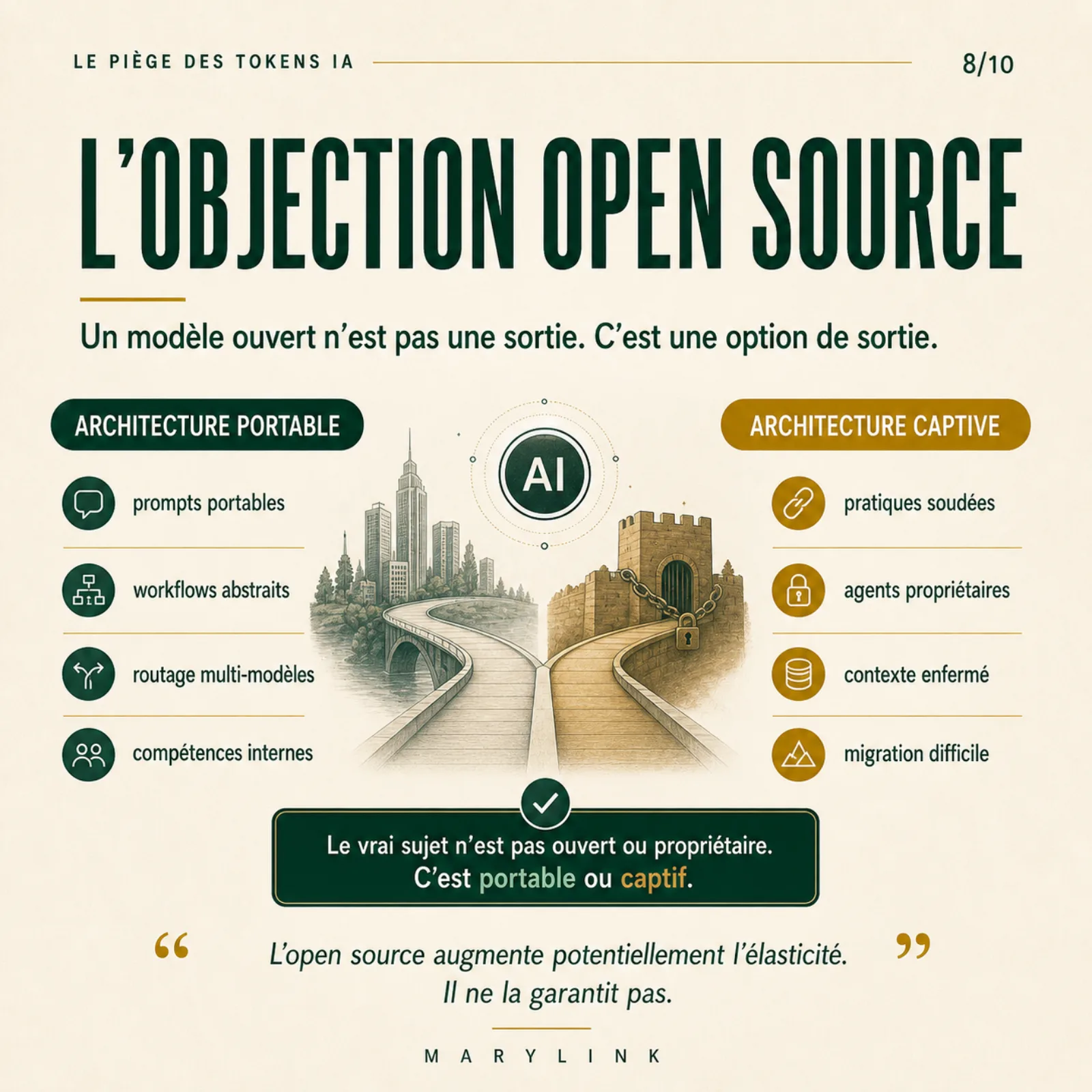
The objection always comes: if the price rises, we'll switch to an open model. It confuses two things. An open model isn't an exit, it's an option to exit, and an option is worth something only if the architecture lets you exercise it. You can be captive with an open-source model if prompts, agents and context are welded to it; you can stay free with a proprietary model if you keep portable prompts, abstract workflows, multi-model routing and internal skills.
The real divide isn't open versus proprietary. It's portable versus captive. Open source potentially increases elasticity, it never guarantees it.
Why the increase comes now, and not before
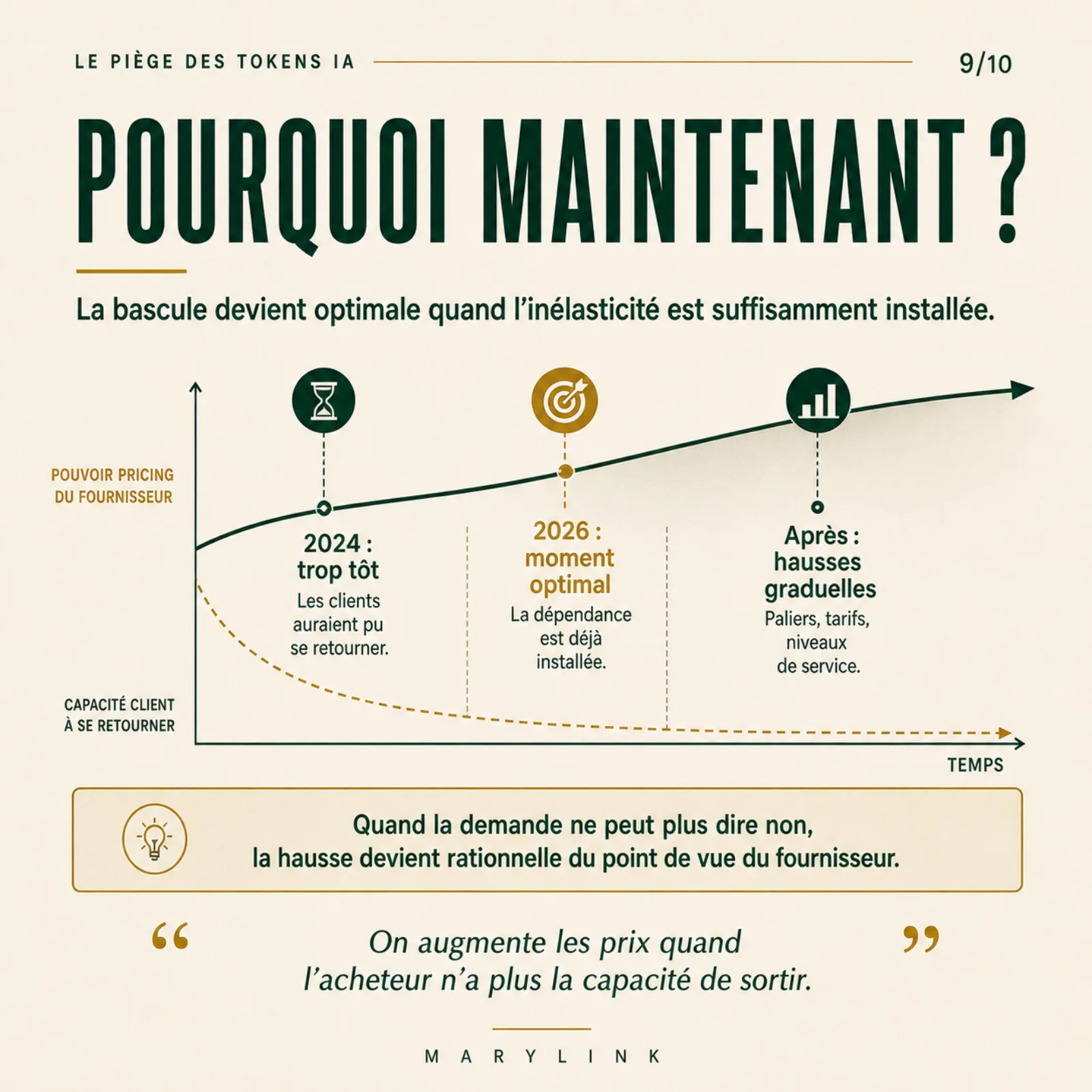
The timing isn't chance, it's an optimum. Raising prices in 2024 would have been premature: customers could still turn around, specific investment was thin, portability real. Waiting until dependence is installed changes everything. When vendor pricing power rises and the customer's ability to switch collapses, the increase becomes rational from the seller's view, and painless to impose.
The historical analogy is the 1973 oil shock: the price doesn't spike because oil becomes scarce overnight, but because economies have become unable to do without it in the short term. Dependence always precedes the price. It's dependence that makes the price possible.
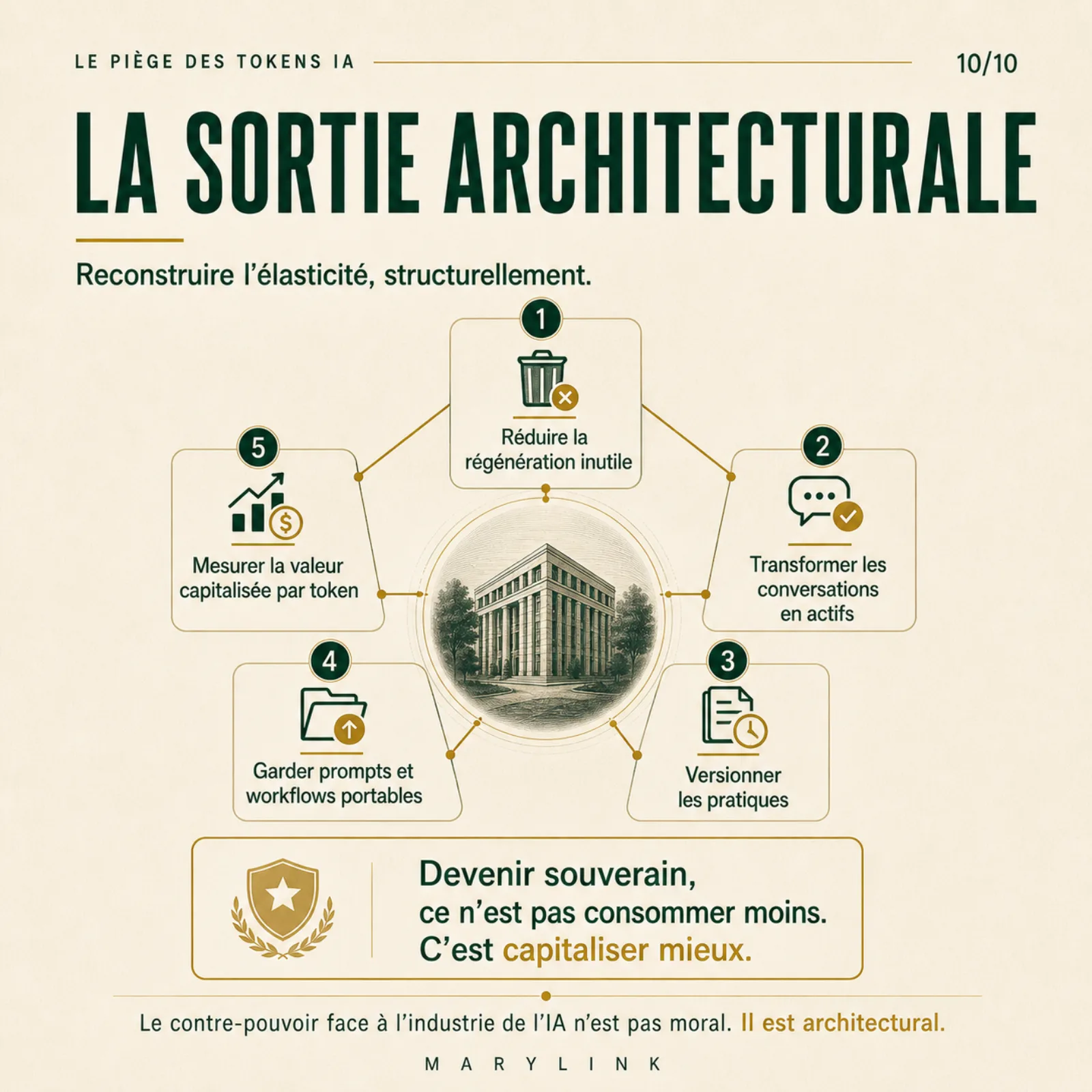
The only exit is architectural
If captivity is built, it can be unbuilt, but not through morality or a better contract. It's unbuilt by rebuilding elasticity, structurally: cut needless regeneration, turn conversations into governed assets, version practicesPracticeA unit of know-how captured in Marylink: not a document but an executable structure (content, prompt, rules, style)., keep prompts and workflows portable, measure value capitalized per token rather than tokens consumed. Becoming sovereignSovereigntyEuropean hosting and full control of your data: it is never used to train third-party models. isn't consuming less, it's capitalizing better, while staying in control of your practices. For the underlying economic concept and the market mechanics, read built-in inelasticity. The counter-power facing the AI industry isn't moral. It's architectural.